Rent verification is one of the biggest make or break steps in a DSCR file because the property’s income is what carries the loan. If your rent story is clear, underwriting moves faster. If it is messy, you can end up in a loop of extra conditions, delays, and last-minute document requests.
This article walks you through what rent verification really means, how rental income is typically reviewed, and how to present your file in a clean, lender-ready way. The goal is simple: help you prove the rent, protect your timeline, and keep your investing plan moving.
What Does Rent Verification Mean In A DSCR File?
Rent verification is the process of confirming that the rent amount used for underwriting is real, reasonable for the market, and backed by documentation that makes sense. DSCR loans commonly focus more on the property’s cash flow than your personal income, so the rent evidence becomes the heart of the file.
Rent verification usually answers three practical questions:
- What rent is the unit expected to generate based on the lease or market?
- Is the unit actually generating rent today, or is it reasonably expected to rent at that level?
- Do the documents tell one consistent story, with no gaps that raise concerns?
Think of it like this: underwriting is not trying to make you jump through hoops. Underwriting is trying to confirm the numbers they are using are believable and stable. When your file proves rent clearly, the lender can make a confident decision.
Why Do Rental Income Standards Matter So Much In Underwriting?
Underwriting standards exist to avoid bad assumptions. Even when a loan is structured around investment cash flow, the review still needs to be grounded in real, documentable income. The rent number cannot be a hope. It needs to be a supported figure that matches the property’s reality.
This matters for one rental and it matters even more as you scale. Many investors use multiple programs across the life of a deal. For example, you might use fix & flip loans to acquire and renovate, then transition into DSCR loans or buy & hold mortgages once the property is stabilized. Or you might use new construction loans for a build, then lease the property and refinance into a long-term product.
No matter the path, underwriting will look at the same thing when the exit strategy is a rental: can the rent be verified, and does it support the payment?
What Documents Can Prove Rent Clearly And Quickly?
When rent verification goes smoothly, it is usually because the investor provides documents that are complete, consistent, and easy to read. The strongest files use a mix of lease evidence, payment evidence, and market support where needed.
Here are the most common documents that help prove rent:
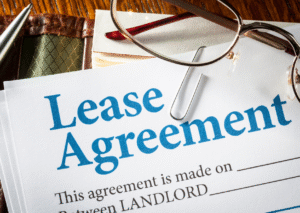
- Signed lease agreement showing rent amount, term, start date, and signatures
- Lease addenda for renewals, rent increases, or special terms
- Proof of rent collected, such as bank statements showing deposits that match the lease amount and timing
- Rent roll (especially for 2 to 4 units or small multifamily), showing unit status and rent per unit
- Proof of occupancy when requested, such as a move-in checklist or utility confirmation
- Market rent support when the unit is vacant or recently renovated
- Tax and insurance evidence because net cash flow depends on more than just rent
If you are building a repeatable system, keep a simple “rent folder” for each property. It saves time when you do BRRRR financing, cash out refinance, or when you refinance from a short-term plan into a long-term rental product.
How Should Investors Organize Their Rent File Before Applying?
A strong file is not about having more paper. It is about having the right paper, in the right order, with no contradictions.
Start by organizing your documents like an underwriter would review them:
- Lease first
Make sure the lease is signed and readable. Confirm the rent amount and dates match what you are claiming. - Payments second
Highlight or clearly label the deposits that match rent. If deposits are bundled, explain why. - Rent roll third
If you have more than one unit, the rent roll should match each lease. - Market support last (if needed)
Use market support when a unit is vacant or newly stabilized and you need to show what rent is reasonably expected.
If there is anything unusual, add a short explanation before underwriting asks. A one-paragraph explanation can prevent a week of back-and-forth.
This is also where real estate financing solutions become practical, not theoretical. When your rent documentation is clean, you can move between strategies with less friction, including refinancing, portfolio expansion, or shifting from a renovation plan into a long-term hold.
How Is Market Rent Supported When A Unit Is Vacant Or Changing?
A vacant unit is not a deal breaker, but it changes how rent is verified. Without current rent deposits, underwriting often needs a reasonable way to estimate what the property should rent for in today’s market.
Market rent support typically relies on comparable rentals. The idea is to show that your projected rent lines up with what similar units are actually renting for nearby. Strong market rent support usually includes:
- Comparable units with similar size, bedroom count, and condition
- Similar location and neighborhood factors
- Comparable amenities and features
- A realistic range rather than an inflated number
Market support matters most in situations like these:
- You just finished renovations and the unit is not leased yet
- You bought a vacant property and plan to place a tenant after closing
- The property is transitioning from short-term occupancy to long-term tenants
- You are coming out of construction and leasing is still in progress
The best approach is conservative and clear. If your projected rent is on the high end, be prepared to explain why, using property features and credible comparisons.
What Rent Verification Problems Most Often Delay Underwriting?
Delays usually come from mismatches, missing context, or unclear records. If you fix these issues before you submit, your timeline improves.
Here are the most common problems and how to avoid them:
- Lease and deposits do not match
If the lease says one amount and deposits show another, underwriting will ask for clarification. Make sure any increase is supported by an addendum. - Cash payments with no traceable trail
Cash is hard to verify. If cash was collected, provide receipts and show consistent deposit patterns where possible. - Deposits are bundled with other income
If multiple payments hit the account together, label them clearly. A simple note like “three units paid rent” plus the rent roll can help. - Rent roll errors
Wrong unit numbers, missing dates, or unclear occupancy status triggers questions. Clean it up before submission. - Vacancy with no market support
If the unit is vacant, show realistic market rent evidence instead of guessing. - Unexplained gaps
If a unit was vacant due to repairs, show the timeline and the plan. Underwriting wants context, not perfection.
A clean file is not one that never had problems. A clean file is one where the documents explain the story without confusion.
How Do Rental Records And Tax Reporting Support The Income Story?
For long-term investors, rental income reporting often becomes another form of support because it shows a history of rental activity. While DSCR underwriting may not always require full personal income documents, consistent rental records can help show that your rental business is real and organized.
A practical system that supports both underwriting and good bookkeeping includes:
- Separate accounts for rental deposits when possible
- Consistent deposit descriptions or notes
- A rent ledger that matches the lease and the rent roll
- A simple record of vacancy periods and repair timelines
- Clear tracking of property-level expenses that affect cash flow
This becomes especially useful when you are scaling and using additional tools like business credit facilities, credit & debt advisory, and growth & development services. The better your documentation, the easier it is to evaluate performance, plan the next move, and avoid preventable delays.
How Does Rent Verification Connect To A Long-Term Portfolio Plan?
Rent verification is not just a checklist for one loan. It is a system that supports your entire investing strategy.
Here is how it connects to common investor paths:
- When you use fix & flip loans, you may eventually refinance into DSCRr loans after the property is stabilized and leased.
- When you use new construction loans, your future refinance depends on proving lease-up and stable rent.
- When you use buy & hold mortgages, strong rent documentation can still support underwriting efficiency and future portfolio planning.
- When you use BRRRR financing, rent proof is part of what makes the refinance phase smoother.
- When you use cash out refinance, rent documentation supports confidence in the property’s ability to carry the new payment.
- When you use business credit facilities, credit & debt advisory, and growth & development services, the foundation is still the same: properties that perform, with records that prove it.
If your goal is to grow, your documentation should grow with you. A repeatable rent verification system helps you move faster, negotiate with more confidence, and reduce underwriting friction across deals.
Ready To Strengthen Your Rent File And Fund Your Next Move?
If you want financing that matches your strategy, and you want your rent documentation to support faster underwriting decisions, start with No Limit Investments. Explore your options and next steps at No Limit Investments. Call us at 331-210-0501.
Final Thoughts
Rent verification is not about paperwork for its own sake. It is about proving the income that supports your DSCR loan and showing underwriting a clear, believable rent story. When your lease terms, deposits, rent roll, and market support all align, you reduce conditions, protect your timeline, and create a repeatable process you can use again and again. Build that system now, and your next rental-focused deal will feel far more manageable.
Works Cited
“About Publication 527, Residential Rental Property.” Internal Revenue Service, https://www.irs.gov/forms-pubs/about-publication-527. Accessed 12 Mar. 2026.
“About Schedule E (Form 1040).” Internal Revenue Service, https://www.irs.gov/forms-pubs/about-schedule-e-form-1040. Accessed 12 Mar. 2026.
“Commentary And Interpretations: 12 CFR Part 1026 (Regulation Z).” Consumer Financial Protection Bureau, https://www.consumerfinance.gov/rules-policy/regulations/1026/. Accessed 12 Mar. 2026.
“Instructions For Schedule E (Form 1040).” Internal Revenue Service, https://www.irs.gov/instructions/i1040se. Accessed 12 Mar. 2026.
“Rent Reasonableness.” HUD Exchange, U.S. Department of Housing and Urban Development, https://www.hudexchange.info/. Accessed 12 Mar. 2026.
“Topic No. 414, Rental Income And Expenses.” Internal Revenue Service, https://www.irs.gov/taxtopics/tc414. Accessed 12 Mar. 2026.
Frequently Asked Questions:
What documents are best for rent verification in DSCR loans?
The most helpful documents are a signed lease, proof of rent deposits that match the lease amount and dates, and a clean rent roll for multi-unit properties. If the unit is vacant, include market rent support using comparable rentals.
Can I qualify for DSCR loans if the property is vacant at closing?
Yes, it may still be possible. Underwriting will usually rely more on market rent support and your plan to lease the unit. A clear, realistic rent estimate and a strong documentation package can prevent delays.
What is the difference between a rent roll and rent verification?
A rent roll is a summary list of units, rents, and occupancy status. Rent verification is the proof behind those numbers, such as leases, deposits, and market support that confirm the rent is real and reasonable.
How do rent verification standards affect cash out refinance or BRRRR financing?
Both strategies depend on a lender being confident in the property’s rental income. Strong rent verification can reduce conditions, protect your timeline, and support smoother underwriting when you refinance to pull equity out or recycle capital.
How can I avoid underwriting delays when using real estate financing solutions?
Submit a complete file upfront: lease, deposits, rent roll, and explanations for any gaps or changes. If you are scaling with business credit facilities, credit & debt advisory, or growth & development services, keeping consistent property documentation across your portfolio makes approvals faster and easier.