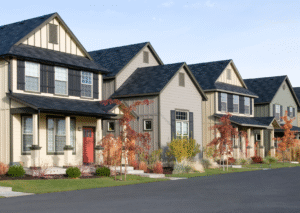
Mixed-use properties can be a practical way to build steady cash flow because they combine more than one type of tenant in a single asset, often apartments plus a street-level commercial space. The upside is diversification. The tradeoff is that mixed-use financing is not underwritten like a simple rental. Lenders want clear proof of legal use, reliable income, and realistic expenses, and they want your story to match the documents.
This guide walks you through mixed-use financing in plain language, so you can screen deals faster, avoid underwriting delays, and choose funding that fits the stage of your investment.
What Makes A Property Mixed-Use And Why Does Financing Change?
A property is commonly considered mixed-use when it combines more than one use, such as housing plus retail or office space, within the same building or development. Financing changes because you have two income engines that behave differently. Residential income is often evaluated through unit rents, vacancy, and market support. Commercial income is evaluated through lease terms, tenant stability, and the risk of downtime between tenants. Underwriting guidance for income-producing real estate emphasizes repayment ability and risk management based on property performance.
Mixed-use also changes operating cost expectations. Shared utilities, common areas, and different insurance and maintenance needs can reduce net operating income. The lender’s question is simple: can the property repay the debt from normal operations?
How Do Zoning And Legal Use Affect Mixed-Use Loan Approval?
Zoning and permits are not just paperwork. If the building is not legally allowed to operate the way it does today, the income is not dependable. Lenders care because legal issues can interrupt income and value. To reduce risk early, confirm legal use before you spend heavily on appraisals and plans:
- Confirm the number of legal residential units matches what is being rented
- Confirm the commercial unit’s permitted use and any occupancy limits
- Confirm planned renovations or buildouts can be permitted
- Confirm there are no open code issues that block leasing or occupancy
When these items are clear, underwriting is usually smoother because the “legal use” story matches the “income” story.
What Income And Lease Details Do Lenders Review Most Closely?
Mixed-use lenders want the income story to be consistent, documented, and repeatable. They commonly request leases, a rent roll, and proof that rent is actually being collected. Appraisal and evaluation guidance stresses credible information and support for value conclusions on income-producing real estate.
Commercial leases often get extra attention because lease structure affects risk. Lenders may focus on who pays which expenses, how long the lease lasts, and what happens if the tenant leaves. If the commercial space is vacant, be ready to explain your leasing plan and why your timeline is realistic. A helpful habit is to make sure the rent roll, leases, and deposit history match each other.
How Can You Estimate DSCR And Cash Flow Before You Apply?
DSCR is a common measure of whether a property’s income can cover the loan payment. In everyday terms, it asks: after normal operating expenses, does the building produce enough money to pay the debt? Federal banking materials describe DSCR as a central way to evaluate repayment capacity from income.
Use this simple estimate:
- Add income from residential rent, commercial rent, and other documented income.
- Subtract vacancy using realistic assumptions for both parts of the building.
- Subtract operating expenses, including taxes, insurance, utilities you pay, repairs, management, and reserves.
- The result is net operating income (NOI).
- Divide NOI by annual debt payments to estimate DSCR.
If your DSCR is tight, small changes can matter. Estimating early helps you choose the right financing path and set realistic expectations.
Which Financing Options Fit Different Mixed-Use Deal Stages?
Mixed-use financing works best when you match the loan to the stage of the deal. A building that needs rehab and lease-up is different from a stabilized building with durable leases. Many investors use a two-step approach: fund acquisition and improvements first, then refinance after stabilization.
One practical way to keep lenders comfortable is to show how the property moves from riskier to safer over time. For example, a value-add mixed-use deal can start with shorter-term funding while you complete repairs and sign leases, then transition into income-based terms once collections are consistent. That stage-by-stage plan, supported by leases, deposits, and a clear expense picture, often makes approvals smoother.
Depending on the plan, investors may use fix & flip loans for heavy value-add phases, BRRRR financing for buy, rehab, rent, and refinance projects, DSCR loans when income drives qualification, and buy & hold mortgages for long-term ownership when the building is stable. If equity has been created through rehab and stabilization, a cash out refinance can recycle capital into the next acquisition. For ground-up or major redevelopment, new construction loans can fund the build phase, followed by longer-term financing after completion and lease-up. These are part of the financing paths and services described at No Limit Investments.
What Appraisal And Documentation Issues Most Often Delay Closings?
Mixed-use closings can slow down when documents are missing, inconsistent, or hard to verify. Regulators emphasize that valuations and credit decisions should be supported by credible information and appropriate documentation. In practice, delays often come from income support that does not tie out, unclear expense responsibilities, or incomplete renovation plans.
To avoid problems, make sure your deal package tells one consistent story from leases to deposits to expenses. If the commercial tenant is new or the space is vacant, provide a clear plan grounded in the property’s condition and leasing reality.
What Documents Should You Gather To Move Underwriting Faster?
You do not need a perfect binder, but you do need a clean set of documents that supports your numbers. The goal is to reduce back-and-forth by making it easy to verify income, expenses, and plans.
Gather these items early:
- Current leases for residential and commercial spaces
- A rent roll that matches the leases and shows occupancy accurately
- Proof of rent received that ties to the rent roll
- An expense summary supported by real numbers, including taxes and insurance
- A rehab scope and budget if work is planned, with a realistic timeline
- A vacancy explanation and leasing plan if the commercial space is vacant or turning over
When these items are consistent, underwriting can focus on terms instead of chasing missing pieces.
When Should You Use Cash-Out Refinance Or Business Credit To Scale?
Scaling often depends on capital recycling and operational flexibility. A cash out refinance can turn created equity into capital for your next down payment or renovation budget, but it usually works best after the property is stabilized and income is supportable.
Business credit facilities can help cover working capital during buildouts, vacancies, or repairs. Credit & debt advisory can help reduce approval obstacles tied to credit profile and existing debt. Growth & development services can support planning around leverage, reserves, and deal sequencing so scaling is steady. These services are offered through No Limit Investments and can be paired with real estate financing solutions as your portfolio grows.
If you want a strategy-first partner for mixed-use financing, explore fix & flip loans, buy & hold mortgages, BRRRR financing, cash out refinance options, DSCR loans, new construction loans, real estate financing solutions, business credit facilities, credit & debt advisory, and growth & development services at No Limit Investments.
In conclusion, mixed-use financing becomes much easier when you follow a clear process: confirm legal use early, build an income story supported by leases and collections, estimate DSCR with realistic vacancy and expenses, and match financing to the stage of the deal. With strong documentation and a plan for stabilization, mixed-use can deliver dependable cash flow and support long-term scaling across multiple markets.
Works Cited
“Commercial Real Estate Lending.” Comptroller’s Handbook, Office of the Comptroller of the Currency, https://www.occ.gov/publications-and-resources/publications/comptrollers-handbook/files/commercial-real-estate-lending/pub-ch-commercial-real-estate.pdf. Accessed 13 Mar. 2026.
“FDIC Federal Register Citations.” Federal Deposit Insurance Corporation, https://www.fdic.gov/federal-register-publications/fdic-federal-register-citations-1823. Accessed 13 Mar. 2026.
“Interagency Appraisal and Evaluation Guidelines.” Federal Deposit Insurance Corporation, https://www.fdic.gov/news/financial-institution-letters/2010/fil10082a.pdf. Accessed 13 Mar. 2026.
No Limit Investments. “Services.” No Limit Investments, https://nolimitinvestments.net/services/. Accessed 13 Mar. 2026.
“What Does ‘Mixed-Use Development’ Mean?” Federal Reserve Bank of Minneapolis, https://www.minneapolisfed.org/article/1998/what-does-mixeduse-development-mean. Accessed 13 Mar. 2026.
Frequently Asked Questions:
What Percentage Of A Mixed-Use Building Can Be Commercial And Still Qualify For Financing?
Many lenders look at how much of the building is commercial versus residential because it changes risk and underwriting. A common approach is that the property should be primarily residential, but the exact percentage can vary by lender and by the program being used. The safest move is to confirm the commercial share early, then choose financing that matches the property’s actual layout and income profile.
What Documents Do I Need To Prove Income For Mixed-Use Financing?
Most lenders will want a clear paper trail that matches your numbers. Expect to provide current leases for residential and commercial units, a rent roll, and proof of rent received that ties back to the rent roll. You may also need an expense summary and documentation supporting property taxes, insurance, utilities you pay, and any planned renovation scope and budget.
Can I Use DSCR Loans For Mixed-Use Properties?
Yes, DSCR loans can work for mixed-use when the income is stable and well-documented. Lenders typically want consistent rent collection, realistic expenses, and leases that support the income story. If the building is still in rehab or the commercial space is vacant, you may need to stabilize first before DSCR-based terms become a good fit.
Should I Renovate First Or Refinance First In A Mixed-Use BRRRR Plan?
In most mixed-use BRRRR projects, renovations come first because the goal is to improve value and stabilize income before refinancing. Refinancing becomes easier once the building is leased, rent deposits are consistent, and expenses are predictable. A clean stabilization period often makes underwriting smoother and can support better refinance outcomes.
How Can I Avoid Closing Delays On A Mixed-Use Purchase Or Refinance?
Most delays happen when documents do not match the income story. To avoid this, make sure your leases, rent roll, and deposits tie together, and be clear about who pays which expenses. If work is planned, provide a detailed rehab scope, budget, and timeline. If the commercial space is vacant, include a realistic leasing plan that matches the property condition and the local demand.