Housing Choice Voucher mobility areas can open up strong investing opportunities, but they also come with details you have to respect. Rent approval rules, inspection timing, and documentation can affect how fast you stabilize a unit and how quickly you can refinance or scale. If you are an investor trying to line up non-owner-occupied financing with a voucher lease-up plan, you do not need complicated theory. You need a practical roadmap.
This guide explains how mobility areas work, how rent support can vary by location, what landlords must prepare, and how to match your financing strategy to the real-world timeline of inspections, approvals, and lease execution. It is written to help you avoid delays, protect your cash flow, and build a repeatable system you can use again and again.
What Are Housing Choice Voucher Mobility Areas?
Mobility areas are locations that some local voucher programs highlight to help families access a wider range of neighborhoods. The goal is often to reduce barriers that keep families concentrated in only a few pockets and to support moves into areas with more opportunity. In everyday terms, “mobility areas” is often a local label that can overlap with tools like ZIP-code-level rent estimates and mobility support services, depending on local program design.
How mobility areas are defined can vary. Some programs map mobility areas using neighborhood boundaries or ZIP-code-level tools. Others connect mobility to support services that help families search and move. Either way, when mobility is part of the local approach, it can influence where voucher households look and what rent levels can be supported in certain locations.
For investors, the practical meaning is this: mobility areas can bring demand, but they also require you to understand how rent limits, rent approval, and inspection steps interact with your timeline.
How Do Mobility Areas Influence Payment Standards And Rent Limits?
Voucher rent support is often tied to “payment standards,” which are local limits used to determine the maximum subsidy amount. In many places, mobility goals are supported by using rent estimates that vary by small geographic areas, often by ZIP code, instead of one single metro-wide figure. This approach is commonly discussed as small-area rent setting and is used to align voucher rent support more closely with neighborhood-level market conditions.
Payment standards are not a blank check. They are part of a structured system with rules about where the payment standard can be set and how it must be administered. The idea, however, is important for investors: in mobility-driven areas, rent support may be higher than what you would expect under a single blended metro number, but the proposed rent still must pass rent reasonableness and program calculations, so higher limits do not automatically mean higher approved rent.
The safest approach is to verify three things early:
- Whether small-area rent setting applies in your target location.
- The applicable payment standard range and policy limits.
- Whether your proposed rent can pass rent reasonableness for the unit and the market.
What Does Rent Reasonableness Mean In Mobility Areas?
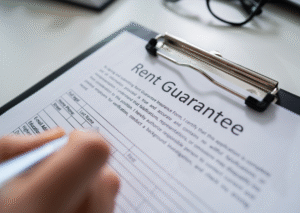
Rent reasonableness is the check that keeps rent requests grounded in the local market. Even if payment standards are higher in a mobility area, the rent must still be reasonable compared to similar unassisted units. The key is that the unit’s rent should make sense based on size, condition, location, and amenities.
From an investor standpoint, this affects how you price your unit and how you present your rent request. You can reduce friction by preparing a short, clear rent support file that explains why the rent is appropriate. That file does not have to be fancy. It just needs to connect your rent to reality. If you skip this step, you can end up in a back-and-forth that delays lease-up.
Mobility areas can create the temptation to push rent to the maximum. A more stable approach is to price the unit based on what the market supports, then confirm it fits inside the local payment standard policy. When you do both, you reduce the risk of delays.
How Do Inspections Affect Timelines And Cash Flow?
Inspections can make or break your timeline. If your unit is not ready on inspection day, approvals can pause and your cash flow can be delayed. That risk is not a reason to avoid voucher leasing. It is simply a reason to build inspection readiness into your process.
Inspection requirements focus on basic health and safety standards and habitability. The standards are not about luxury finishes. They are about ensuring the home is safe and functional. The most common issues that create delays tend to be simple: missing smoke detectors, loose handrails, broken windows, non-working outlets, leaks, or utility problems.
A smart investor treats inspection like a pre-listing checklist. You plan for it the same way you plan for a rehab scope. When you reduce the probability of a failed first inspection, you reduce vacancy days and protect your financing timeline.
What Documents Help Landlords Succeed In Mobility Areas?
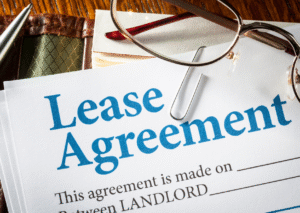
Documentation is where many deals win or lose time. When you have the right documents ready, the process can move smoothly. When you do not, every missing form becomes a delay.
Here are landlord-facing documentation items investors typically prepare.
- Proof of ownership and signing authority so the lease and program paperwork can be executed correctly
- A completed lease package that matches unit details and utility responsibilities
- Program-required tenancy approval forms completed with no blanks and consistent unit data
- A rent support summary explaining condition, amenities, and market positioning to support rent reasonableness
- Inspection readiness checklist showing the unit is prepared before the first inspection attempt
- A clean property file with insurance, taxes, and basic maintenance records to support stable operations
This documentation discipline also supports financing. When you can show a predictable lease-up plan and a clean rent approval timeline, your non-owner-occupied strategy becomes easier to execute.
How Should Investors Match Financing To Mobility Area Deal Stages?
Mobility area investing is not one single strategy. Some deals require rehab. Some are rent-ready. Some are long holds. Some are BRRRR plays with a refinance stage. The financing must match the stage and the timeline.
Here is how financing options available through No Limit Investments can fit naturally into mobility-area investing:
- Fix & flip loans can fit when the property needs repairs or upgrades before it can pass inspection and lease up.
- BRRRR financing can fit when your plan is to rehab, lease up, stabilize income, and then refinance into a long-term hold.
- Buy & hold mortgages can fit when the unit is stabilized and your goal is steady long-term cash flow.
- DSCR loans can fit when the property income story is clear and your approach is centered on rental performance and investor readiness.
- Cash out refinance can support scaling by letting you redeploy equity into additional acquisitions once a property is performing.
- New construction loans can fit when you are building inventory and need a documented plan, budget, and timeline.
- Real estate financing solutions can help when a deal is unique and needs a structure aligned to the real plan, not a generic box.
- Business credit facilities can support operations, reserves, or working capital needs that strengthen execution.
- Credit & debt advisory can support financial readiness and reduce friction as you scale.
- Growth & development services can support repeatable systems, portfolio planning, and long-term scalability.
The main idea is simple: your financing should support the real timeline of make-ready work, inspection readiness, rent approval, lease execution, and stabilization.
What Are The Biggest Risks And How Can You Reduce Them?
Most mobility-area risks are operational. They show up as delays, missed timelines, or unexpected costs. You can reduce these risks with a repeatable system.
Here are common risks and practical ways to reduce them.
- Failed first inspection: Reduce risk by completing a pre-inspection checklist and fixing basics before scheduling.
- Rent approval delays: Reduce risk by preparing a rent support file and keeping unit details consistent across forms.
- Vacancy during processing: Reduce risk by responding quickly, keeping paperwork complete, and planning reserves.
- Over-improving without ROI: Reduce risk by budgeting upgrades that support durability, safety, and market expectations rather than unnecessary extras.
- Timeline mismatch with your loan: Reduce risk by choosing financing that matches rehab and lease-up sequencing, not just the long-term vision.
- Scaling without systems: Reduce risk by standardizing documentation, make-ready checklists, and communication workflows.
When you manage these risks, mobility-area leasing can become predictable. Predictability is what lets you scale.
When Should Investors Seek A Scalable Strategy For Mobility Areas?
Investors usually need a more scalable approach when they move beyond one-off deals. You should think in “systems” when:
- You are acquiring multiple units and need repeatable lease-up steps.
- You are managing rehab plus inspection timelines at the same time.
- You want to transition from rehab to refinance without confusion.
- You want consistent underwriting readiness for non-owner-occupied financing.
- You want to build a portfolio strategy instead of chasing random deals.
A scalable strategy combines three things: (1) disciplined acquisition criteria, (2) a documented make-ready and inspection readiness process, and (3) financing that fits the real timeline. Mobility areas can support long-term growth when you treat them as a repeatable play, not a gamble.
If you want to finance non-owner-occupied deals while building a repeatable approach to Housing Choice Voucher mobility areas, visit No Limit Investments to explore investor-focused options like fix & flip loans, buy & hold mortgages, BRRRR financing, cash out refinance, DSCR loans, and new construction loans, along with real estate financing solutions, business credit facilities, credit & debt advisory, and growth & development services. When your financing and your operational plan match the mobility-area process, you can stabilize faster and scale with more confidence.
Final Thoughts
Housing Choice Voucher mobility areas can be a strong investor strategy when you understand how rent support, rent reasonableness, and inspections affect timelines. The path is not complicated when you break it down: target the right areas, price the unit realistically, prepare a clean documentation file, get inspection-ready before scheduling, and match your financing to the real deal stage.
When you build a repeatable system, voucher leasing can become more predictable and mobility-area investing can support steady, long-term portfolio growth.
Works Cited
Center on Budget and Policy Priorities. “A Guide to Small Area Fair Market Rents (SAFMRs).” CBPP, 4 May 2018, https://www.cbpp.org/research/a-guide-to-small-area-fair-market-rents-safmrs. Accessed 1 Apr. 2026.
Chicago Housing Authority. Property Owner Guidebook (Housing Choice Voucher Program). Sept. 2022, https://www.thecha.org/sites/default/files/2024-09/PropertyOwnerGuidebook_09.22_HCV.pdf. Accessed 1 Apr. 2026.
Chicago Housing Authority. Housing Choice Voucher Program HQS Inspection Guidebook. Sept. 2022, https://www.thecha.org/sites/default/files/2024-09/HQSInspectionGuidebook_09.22_HCV.pdf. Accessed 1 Apr. 2026.
Local Housing Solutions. “Mobility Counseling for Housing Choice Voucher Holders.” 14 May 2021, https://www.localhousingsolutions.org/housing-policy-library/mobility-counseling-for-housing-choice-voucher-holders/. Accessed 1 Apr. 2026.
U.S. Department of Housing and Urban Development. Housing Choice Voucher Program Guidebook: Payment Standards. June 2025, https://www.hud.gov/sites/dfiles/PIH/documents/HCV_Guidebook_Payment-Standards_June-2025_final.pdf. Accessed 1 Apr. 2026.
U.S. Department of Housing and Urban Development. Housing Choice Voucher Program Guidebook: Rent Reasonableness. Sept. 2020, https://www.hud.gov/sites/dfiles/PIH/documents/HCV_Guidebook_Rent%20Reasonableness_updated_Sept%202020.pdf. Accessed 1 Apr. 2026.
U.S. Department of Housing and Urban Development. “Small Area Fair Market Rents (SAFMRs).” HUD USER, https://www.huduser.gov/portal/datasets/fmr/smallarea/index.html. Accessed 1 Apr. 2026.
U.S. Department of Housing and Urban Development. “Housing Choice Voucher Program Guidebook.” HUD.gov, https://www.hud.gov/helping-americans/housing-choice-vouchers-guidebook. Accessed 1 Apr. 2026.
Frequently Asked Questions:
What Are Housing Choice Voucher Mobility Areas And Why Do They Matter For Investors?
Housing Choice Voucher mobility areas are locations that some local voucher programs highlight to help voucher households access a wider range of neighborhoods. They matter for investors because demand can be strong in these areas, but rent approval rules, rent reasonableness, and inspection timing can affect how quickly a unit stabilizes and starts producing predictable cash flow.
How Do Payment Standards And Rent Reasonableness Work Together In Mobility Areas?
Payment standards set the maximum subsidy range used in the program, and in some locations they can vary by ZIP code based on small-area rent estimates. Rent reasonableness is a separate check that compares your proposed rent to similar unassisted units. Even if a payment standard is higher in a mobility area, your rent still must be reasonable for the market and supported by the unit’s condition, size, and amenities.
What Can I Do To Avoid Inspection Delays When Leasing To Voucher Households?
You can reduce inspection delays by treating inspection readiness like a pre-listing checklist. Make sure basic health and safety items are corrected before scheduling, utilities and outlets function properly, smoke detectors are in place, handrails are secure, and there are no leaks or broken windows. The more prepared the unit is, the better the chance you pass the first inspection and avoid vacancy drag.
What Documents Should I Have Ready To Speed Up A Voucher Lease-Up In A Mobility Area?
You should have proof of ownership and signing authority, a completed lease package with consistent unit details, required tenancy approval forms filled out completely, utility responsibility documentation, a simple rent support summary for rent reasonableness, and an inspection readiness checklist. When your paperwork is complete and consistent, approvals tend to move faster.
Which Financing Options Fit Best When Buying In Mobility Areas As A Non-Owner-Occupied Investor?
The best financing option depends on the deal stage. Fix & flip loans can fit when repairs are needed before inspection readiness. BRRRR financing can fit when you plan to rehab, lease up, then refinance into a hold. Buy & hold mortgages can fit stabilized units, DSCR loans can fit income-focused underwriting, cash out refinance can support scaling, and new construction loans can fit build timelines. Real estate financing solutions and business support services can help when you are structuring unique deals or scaling a portfolio.